
What makes a Turkish kebab unforgettable? It is not simply the smoky aroma that reaches the table or the charred edges that make the first bite so tempting. The real secret lies in everything that happens before, during, and immediately after grilling.
From selecting the right cut of meat to balancing fat, seasoning, heat, and cooking time, Turkish kebab is built around precision. Each detail has a purpose.
When done properly, the result is meat that is tender in the center, beautifully charred outside, richly seasoned, and juicy without feeling greasy.
What Makes the Turkish Kebab Juicy and Unforgettable
Here are a few things that would give your kebabs an unforgeable taste. Explore what makes them right.
- It All Begins With Quality Meat
The foundation of any good kebab is the meat. Turkish cuisine includes many kebab varieties, and the choice can range from lamb and beef to chicken.
For minced kebabs such as Adana kebab, the texture and fat content of the meat are particularly important. Extremely lean meat may look appealing before cooking, but it can become firm and dry when exposed to intense grill heat.
The meat should have enough natural fat to remain moist while cooking. Freshly prepared meat also provides a cleaner flavor and better texture than heavily processed mixtures.
The cut matters too. Different kebab styles call for different textures. Some are prepared from finely minced meat, while others use carefully cut pieces that are marinated before grilling.
- Fat Is More Than Just Moisture
Fat is one of the most important elements behind a juicy kebab. As the meat cooks, fat gradually melts and moves through the mixture. This helps keep the kebab moist while adding richness and carrying the flavors of the seasoning.
Traditional minced kebabs may include lamb fat or other naturally occurring meat fat. The objective is not to make the kebab oily. It is to create the right balance between lean meat and fat.
Too little fat can leave the meat dry. Too much can make it heavy and cause excessive flare-ups over the grill.
The best kebab achieves a middle ground where the fat contributes to tenderness and flavor without overpowering the meat itself.
- Seasoning Should Have a Purpose
Turkish kebab does not need a complicated spice cabinet to taste exceptional.
Depending on the kebab variety and regional preparation, common ingredients can include salt, black pepper, red pepper, paprika, cumin, garlic, onion, and herbs. Adana kebab, for instance, is particularly associated with minced meat and red pepper.
The important part is balance.
Seasoning should support the flavor of the meat rather than completely cover it. Salt brings out the natural savories, while pepper and chili can introduce warmth. Cumin adds an earthy note, while fresh herbs can bring brightness.
This restrained approach is one reason Turkish kebab can taste deeply seasoned without tasting overloaded.
- Marination Creates Layers of Flavor
Not every Turkish kebab needs a marinade. However, margination is particularly important for many chicken and cubed-meat preparations.
Chicken kebabs may be marinated with ingredients such as yogurt, olive oil, lemon, garlic, and spices. The marinade coats the meat and introduces flavor before it reaches the grill.
Yogurt can contribute richness, while lemon adds acidity and brightness. Garlic and spices build aromatic depth.
The duration also matters. A marinade is not necessarily better simply because the meat sits in it for longer. Excessive exposure to acidic ingredients can affect texture.
A well-balanced marinade should complement the meat and allow its natural flavour to remain noticeable.
- The Shape of the Kebab Matters
There is more technique involved in shaping kebab than many people realize.
Minced meat needs to be worked enough to hold together around a skewer, but excessive compression can create a dense texture.
Adana kebab is traditionally shaped around a wide skewer. The meat is spread into a relatively flat form, allowing more surface area to come into contact with the heat.
This creates an appealing contrast between the exterior and center. The outside develops a roasted, lightly charred character while the inside remains tender.
Even the thickness of the kebab can influence cooking. If one section is considerably thicker than another, it may cook unevenly.
- The Grill Is Where the Magic Happens
Once the kebab reaches the grill, heat becomes the most important variable.
Traditional charcoal grilling creates intense direct heat that quickly browns the surface. This develops the roasted flavors and appealing crust associated with grilled meat.
But simply turning up the heat does not guarantee a better kebab.
The grill needs to be hot enough to create browning without burning the outside before the inside cooks. The kebab also needs to be turned at the right intervals.
Too little heat can leave the surface pale and reduce the roasted character. Excessive heat can burn the exterior, dry the meat, and create unwanted bitterness.
Good grilling is therefore about control rather than maximum temperature.
- Charcoal Adds More Than Smoke
One of the defining characteristics of traditionally grilled Turkish kebab is the use of charcoal.
Charcoal creates a dry, intense heat while also contributing subtle smoky aromas. As the meat cooks, its surface interacts with the heat and smoke, producing a flavor that is difficult to reproduce with ordinary cooking methods.
However, great kebab should not taste like a mouthful of smoke.
The best charcoal grilling produces a clean roasted aroma with gentle smokiness. The smoke should complement the seasoning and meat rather than dominate them.
This balance depends on the charcoal; grill temperature, distance from the heat, and cooking technique.
- The Maillard Reaction Creates the Char
That irresistible browned exterior is not accidental.
When the surface of the meat reaches sufficiently high temperatures, complex browning reactions create new aromas, flavors, and colors. This is part of what gives grilled kebab its distinctive crust.
The result is a combination of roasted, savory, and slightly caramelized notes on the surface.
This is why kebab can have such a dramatic difference in flavor between the center and exterior. The inside remains tender and juicy, while the outside develops deeper roasted flavors.
The goal is not to burn the meat. It is to create controlled browning.
- Fresh Accompaniments Balance the Richness
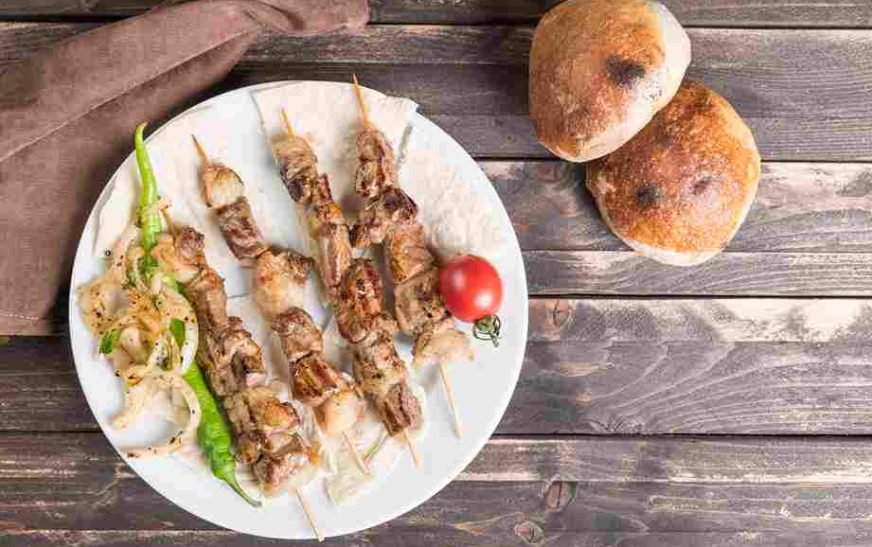
Turkish kebab is rarely served as meat alone. Fresh herbs, grilled peppers, tomatoes, flatbread, salads, lemon, and onions can all play a role in the meal. These ingredients provide acidity, freshness, crunch, and contrasting textures.
Sumac-seasoned onions are especially effective with rich grilled meat. Their tangy character cuts through the richness and refreshes the palate between bites.
Grilled tomatoes and peppers bring sweetness and smokiness of their own. Fresh parsley adds a clean herbal note. These accompaniments are not simply decoration. They help create a balanced meal.
- Bread Can Change the Experience
The way kebab is served can also influence how it tastes.
Warm Turkish bread can absorb some of the meat’s juices while providing a soft contrast to the charred exterior. Depending on the style, kebab may also be served with flatbread, rice, bulgur, or fresh vegetables.
Wrapping grilled meat with warm bread and adding herbs, onions, and a squeeze of lemon creates multiple textures and flavors in one bite.
This combination is part of what makes kebab such a social and satisfying dining experience.
- Timing Matters After Grilling
Even a perfectly prepared kebab can lose some of its appeal if it sits around for too long.
Allowing meat a short resting period can help its juices redistribute after cooking. But kebab is generally best enjoyed while it is still warm and freshly grilled.
The difference is particularly noticeable with minced kebab. Fresh from the grill, the exterior remains slightly crisp and charred while the center retains its moisture.
Serving also matters. Fresh herbs should remain fresh, bread should be warm, and accompaniments should provide contrast rather than overwhelm the meat.
Why Turkish Kebab Remains So Popular
Turkish kebab succeeds because it does not rely on complexity for flavor. It relies on technique.
A handful of carefully selected ingredients can produce remarkable results when the meat is prepared correctly and cooked over the right heat.
That is the beauty of Turkish grilling. The outside develops color, char, and smoky depth, while the center remains tender and juicy. Fresh herbs, vegetables, lemon, and traditional accompaniments then bring brightness to every bite.
Whether you prefer lamb, beef, chicken, Adana, or another Turkish kebab style, the principle remains similar: good ingredients, balanced seasoning, controlled heat, and careful preparation make the difference.
Enjoy the Taste of Turkish Kebab in Dubai
For food lovers exploring Turkish cuisine in Dubai, kebab is an excellent introduction to the depth of Turkish grilling. Look beyond the name on the menu and pay attention to how the meat is prepared, grilled, and served.
A properly cooked kebab should arrive hot, aromatic, tender, and lightly charred, with accompaniments that complement rather than compete with the meat.
That first bite tells the story: smoky from the grill, rich from the meat, bright from fresh accompaniments, and balanced enough to make you reach for another.
FAQs
What makes Turkish kebab juicy?
The right balance of meat and fat is essential. Proper shaping and controlled grilling also help retain moisture without overcooking the meat.
What meat is commonly used in Turkish kebab?
Lamb and beef are widely used for different kebab styles, while chicken is popular for marinated preparations.
What gives Turkish kebab its smoky flavor?
Traditional charcoal grilling creates intense heat and adds a subtle smoky aroma to the meat.
Is Turkish kebab always spicy?
No. Spice levels vary between kebab styles. Some use red pepper or chilli, while others rely on milder seasoning.